Introducing Evolving Roles: Keep Role Briefs True to the Work
A role can change long before its job description does.
New tools arrive. Priorities shift. A growing team redistributes responsibilities. The person doing the work discovers that success depends on skills nobody thought to include when the role was first written.
Then the team hires again using the old brief.
RoleSage's new Evolving Roles feature gives teams a deliberate way to capture what changed, review an updated description, and keep the reusable role aligned with the work people actually do.
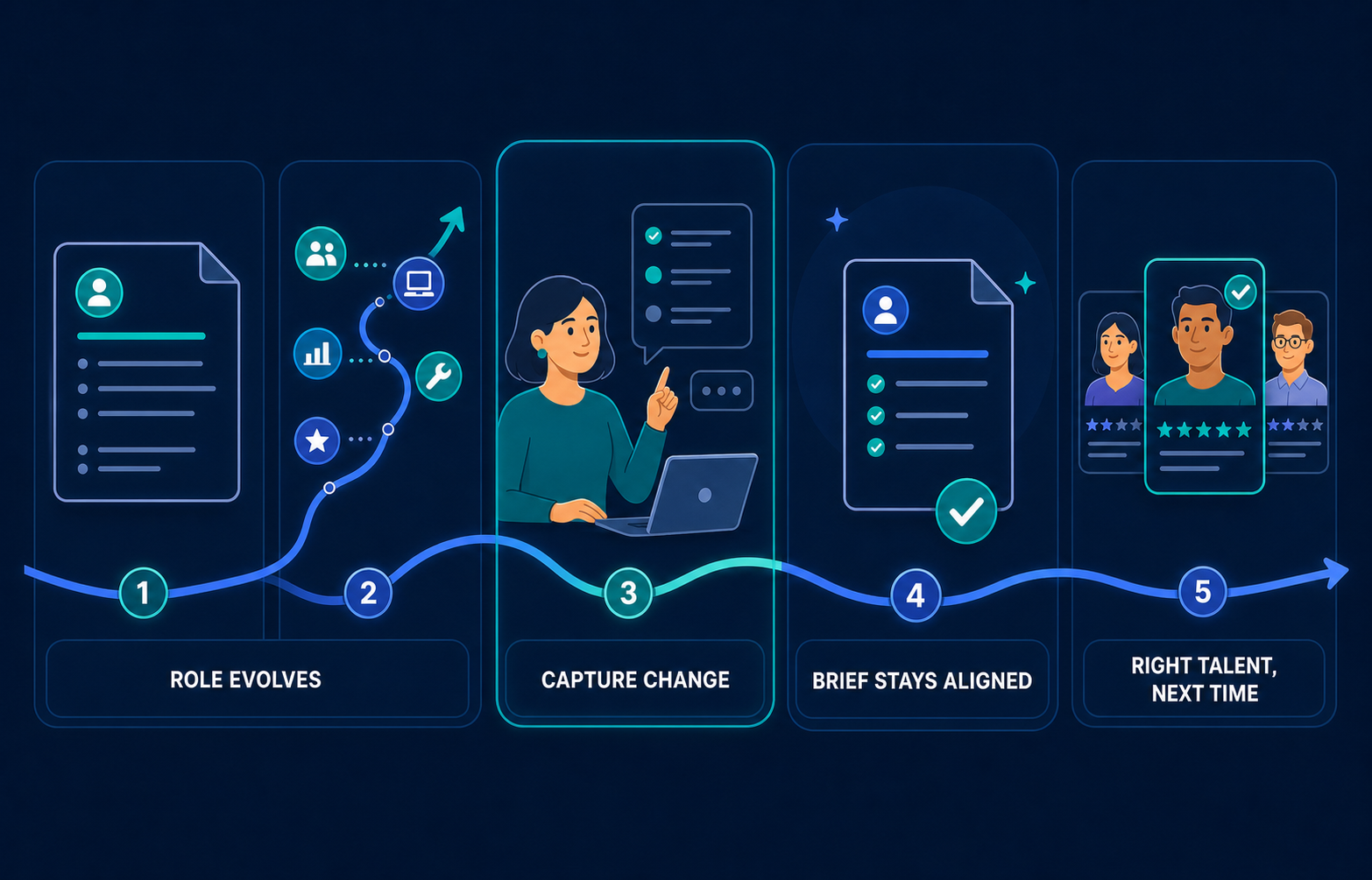
Turn lived experience into a better role brief
A role review starts with a selected team and a named reviewer. The Role Review Coach then helps the reviewer talk through what has changed. They can complete the review alone or include a recent hire or current role-holder in the conversation so intended outcomes and day-to-day reality can both be heard.
The Coach turns that evidence into a proposed job description and a short explanation of how the role evolved. It can also preserve unresolved differences instead of smoothing them over, and flag when the changes may be substantial enough to represent a new role.
The decision remains human-owned. If the work still belongs to the same role, the reviewer can continue. If it appears to be a different role, RoleSage makes that checkpoint explicit rather than silently rewriting the original.
Compare before anything changes
AI should help a team think, not overwrite its source of truth.
That is why Evolving Roles presents the current and proposed descriptions side by side. Nothing changes until an authorized reviewer explicitly accepts the evolved description. They can continue editing, keep the current version, or discard the review.
When a change is accepted, RoleSage records it in the role's evolution history. Earlier accepted versions remain available, and restoring one creates a new revision rather than erasing what happened in between.
Built for the next hire without rewriting the past
An accepted evolution updates the reusable role template, helping the next opening begin with a clearer and more current description. Existing active openings remain snapshots: RoleSage does not silently change a job that has already been published or alter the expectations candidates originally saw.
This distinction matters. Teams get a role brief that can learn over time while retaining a trustworthy record of the decisions that shaped it.
Roles are living knowledge
The best role descriptions are not documents written once and forgotten. They are shared knowledge about the outcomes a team needs, the work people really perform, and the capabilities that will matter next.
Evolving Roles gives that knowledge a safer path forward: evidence from the people closest to the work, AI assistance that stays in proposal mode, explicit human approval, and history that remains understandable.
Because the next hiring decision should be based on the role as it is now, not the role the team remembers writing years ago.