A Resume Is a Thin Slice of a Career
I recently asked Sol for a graphic that represented how little a resume shows of a person's career.
I was genuinely impressed by what it produced.
The image shows a candidate standing opposite a hiring manager holding a single sheet of paper. Behind her, her shadow opens into a flowing, almost flame-like shape. Inside it are teams, tools, projects, learning, problems solved, and the winding path of a working life (well, that's how I 'read' the road).
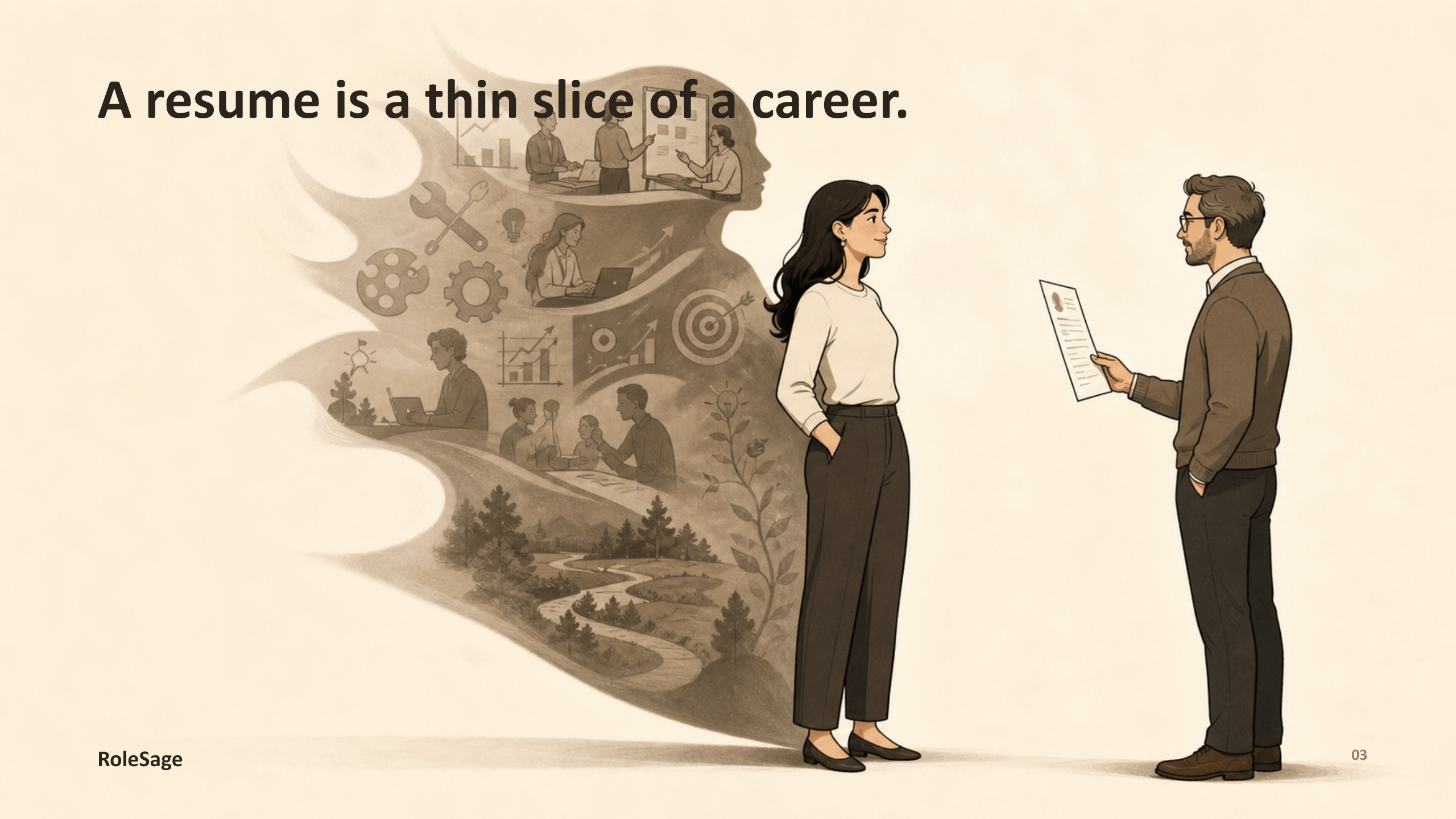
It was more artistic than I expected. More importantly, it captured the idea exactly:
A resume is a thin slice of a career.
The omission is built into the format
A resume cannot contain everything. It is a carefully selected summary where project that took months is represented by a single bullet point.
It may not show the unofficial responsibilities someone took on, the problems they quietly prevented, the colleagues they mentored, the difficult project they recovered, or the years of experience hidden behind an unhelpful job title.
That does not make the resume dishonest, just wafer thin.
AI makes the slice even less trustworthy
A resume was already narrow. Now AI can make almost every resume look amazing.
Polished language, tailored keywords, confident achievements, and clean structure are available to everyone. The document may tell you how well someone—or the tool they chose—can produce a resume. It still tells you very little about the depth of the career behind it.
If every slice has been polished until it looks exceptional, presentation is a poor way to tell candidates apart.
Look at the career, not just the resume
Ask for the evidence behind the claims. What did the person actually do? What changed because of their work? What was difficult? What did they learn?
Look beyond job titles, keywords, and the quality of the writing. Otherwise, strong candidates will keep being missed because hiring teams are comparing polished documents rather than people.
RoleSage is built around the fuller career record: activities, skills, outcomes, and evidence captured over time, with the candidate choosing what to share for a role.
The resume was weak before AI. Do we still ask for it out of habit?
Candidates, people, have so much more depth and colour.